Canterbury · New roof installation
Hipped roof stripped and re-covered in clay tile, Canterbury
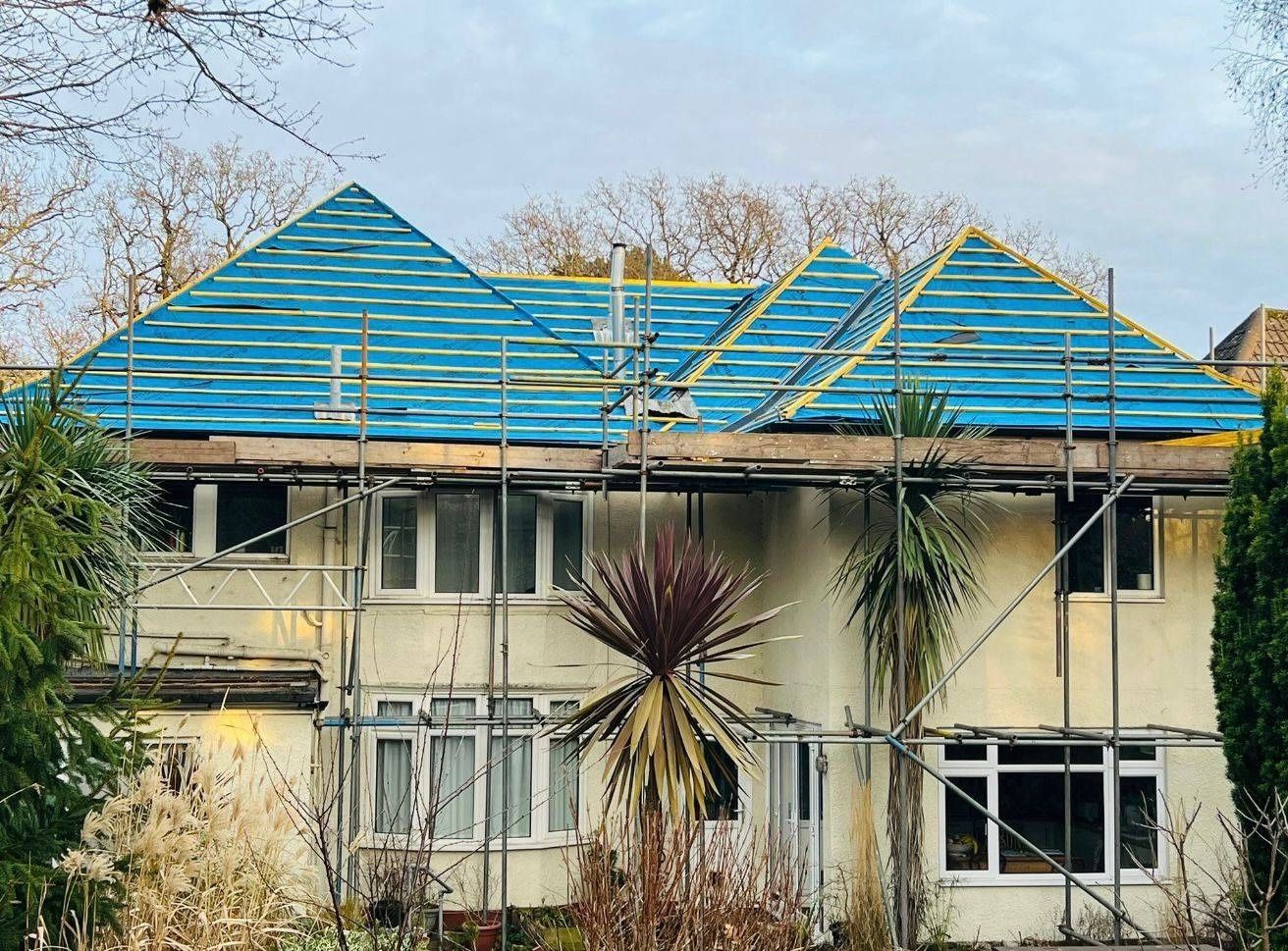
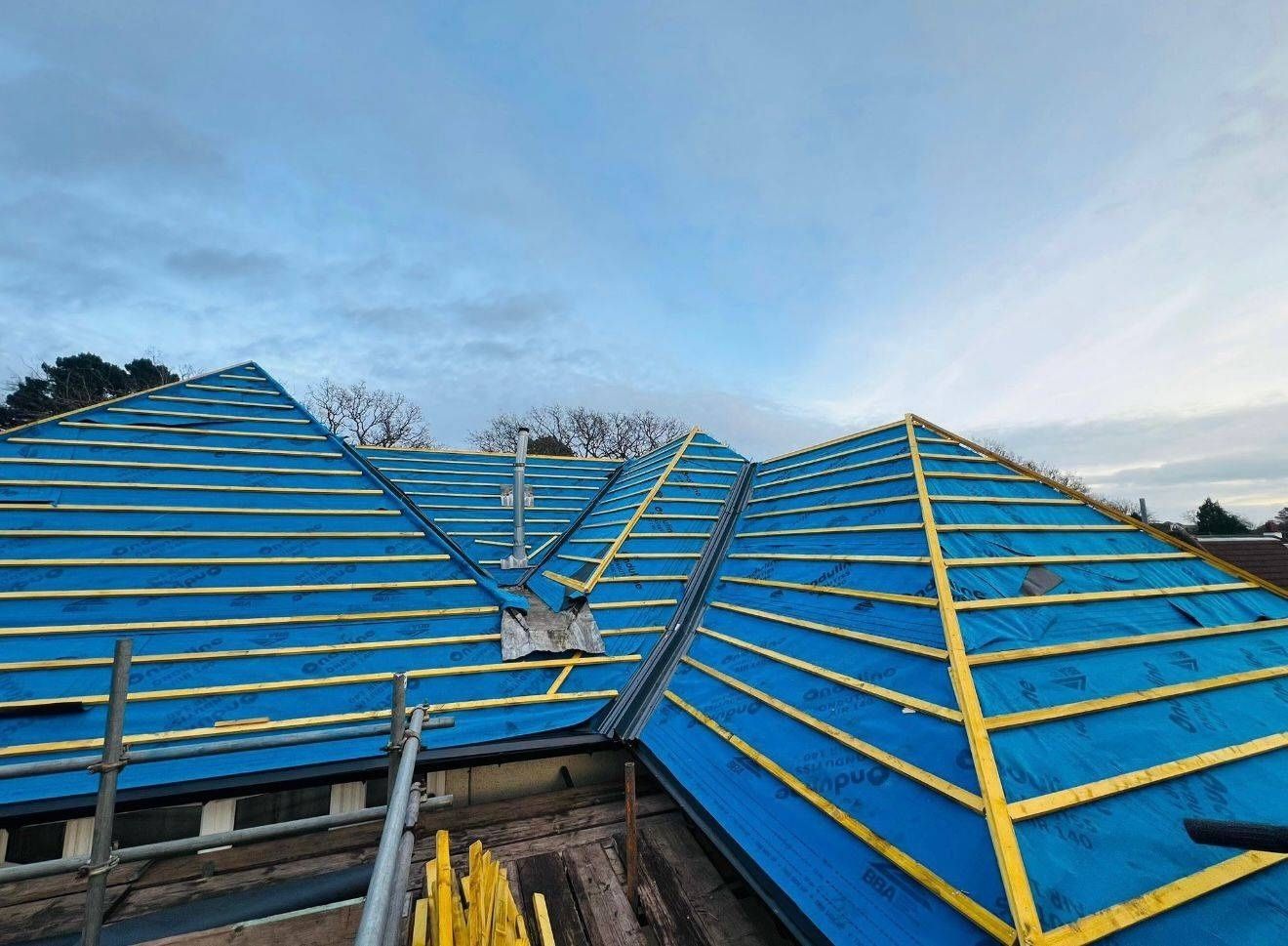
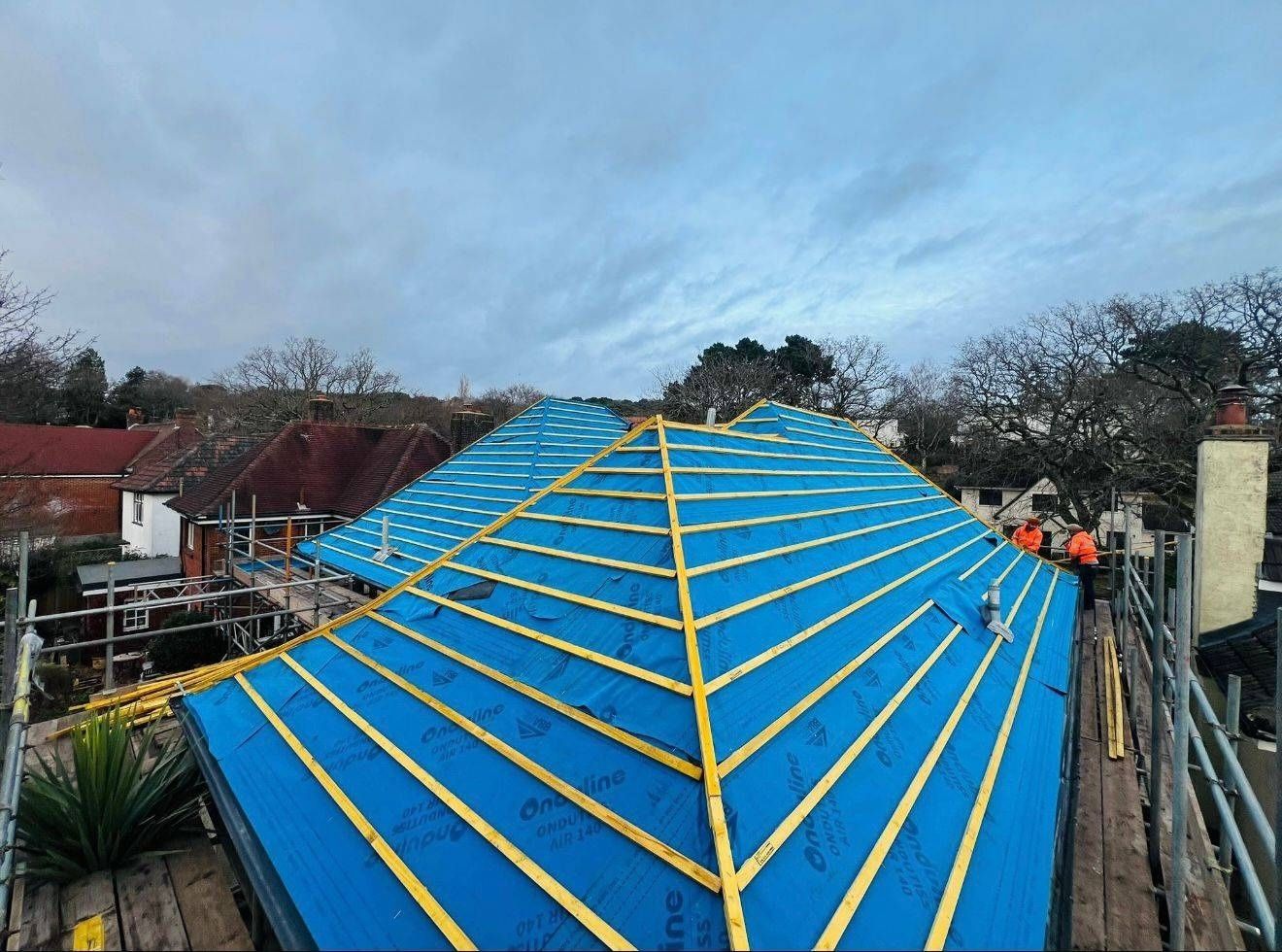
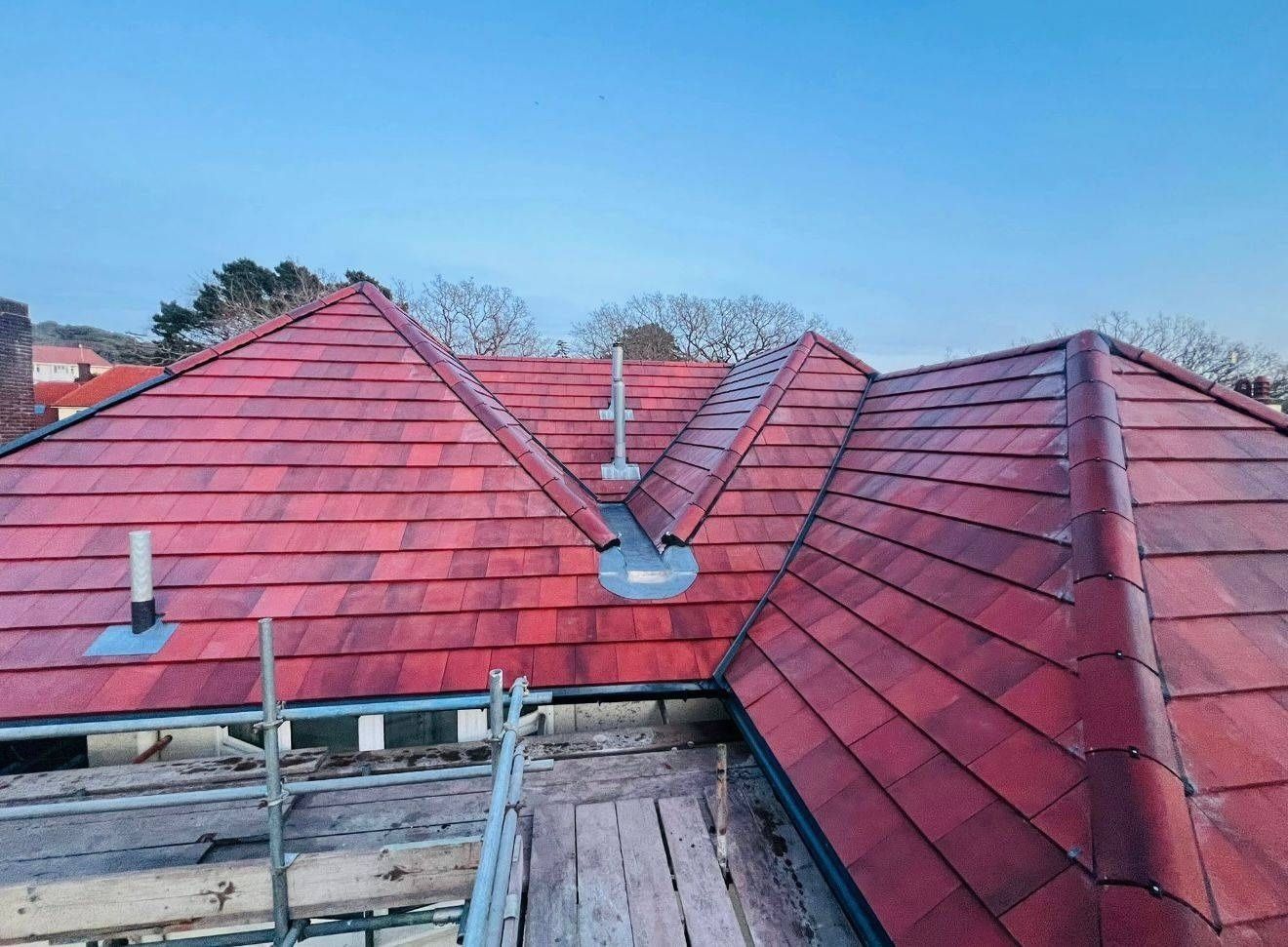
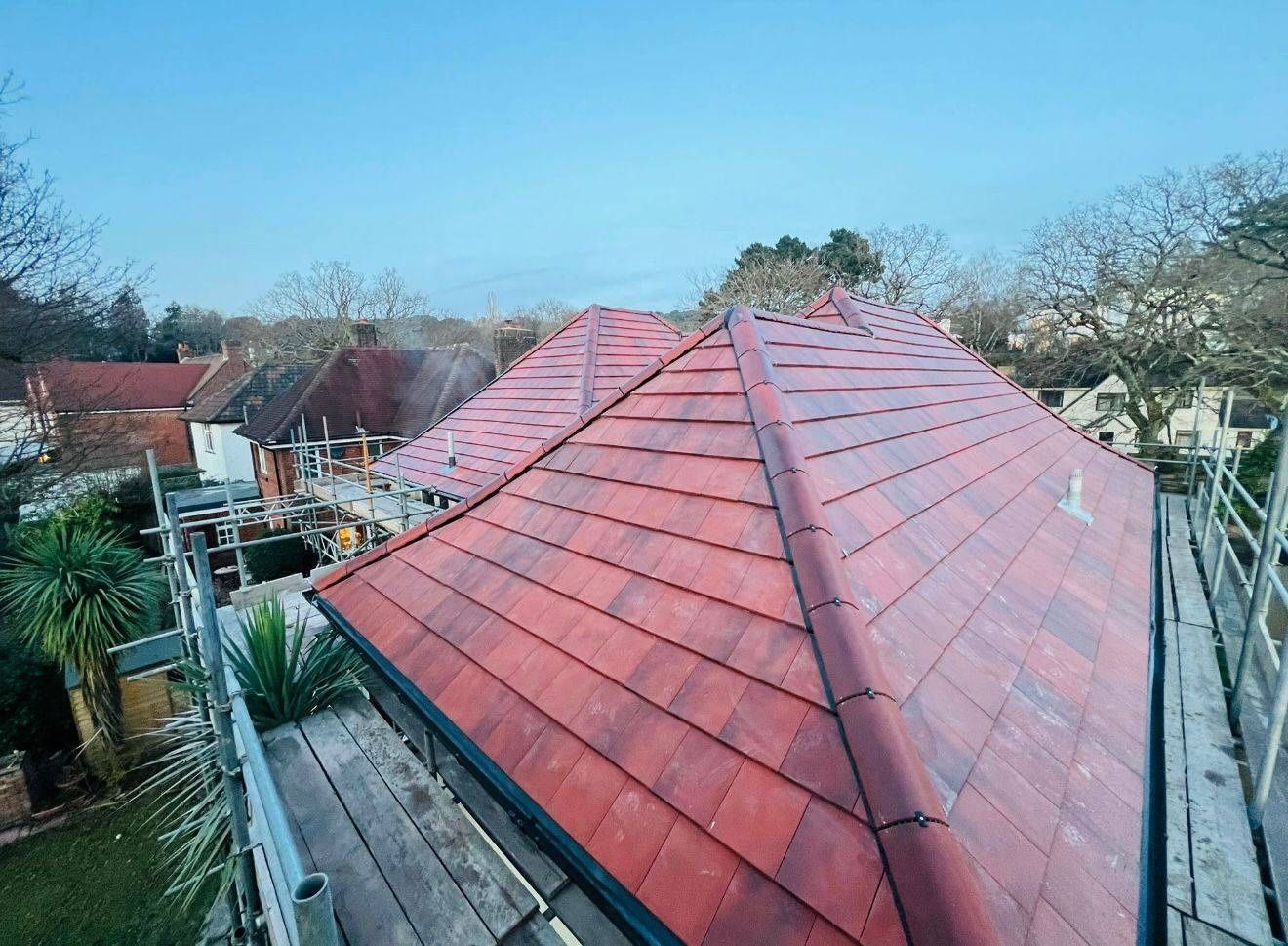
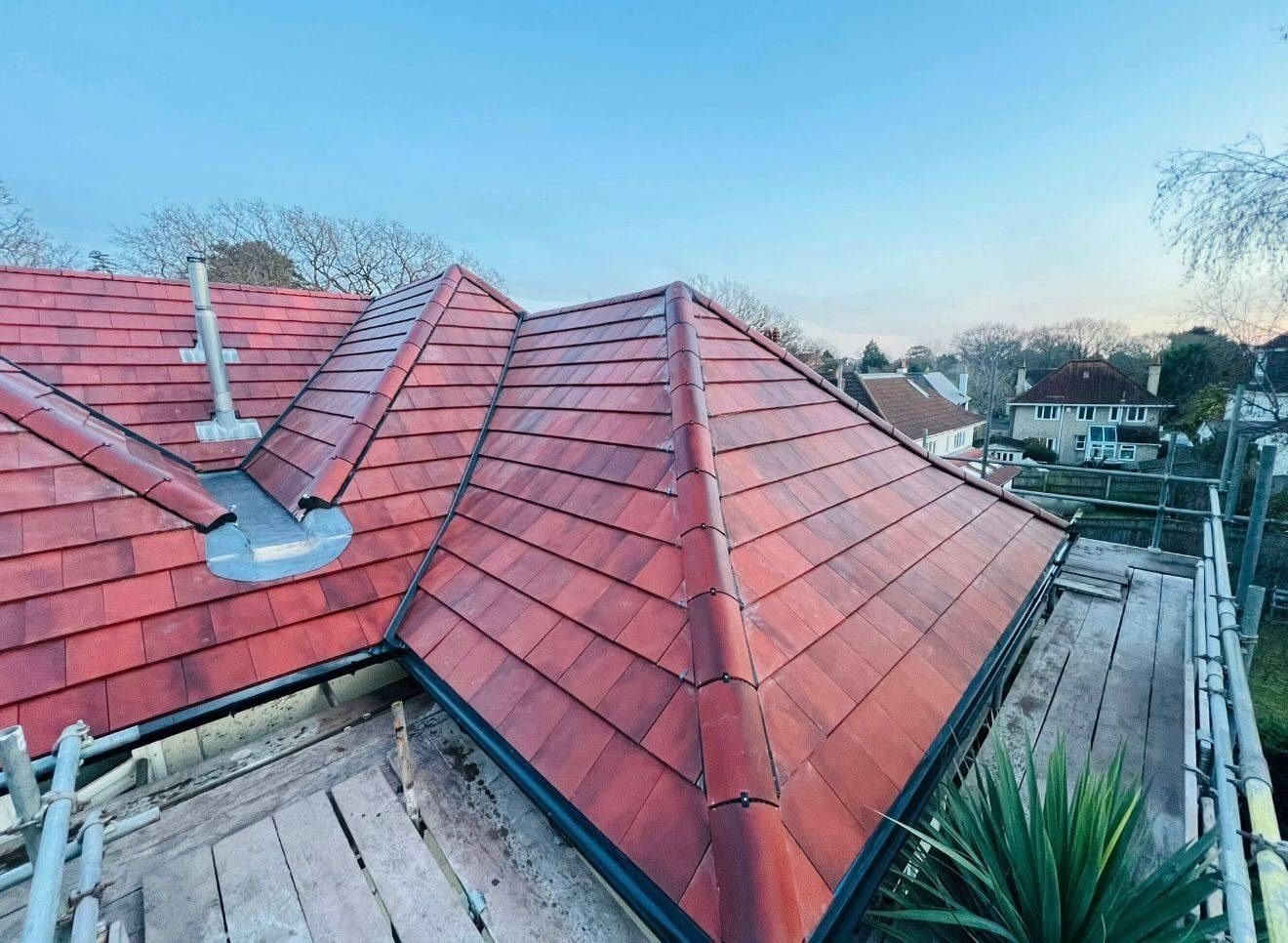
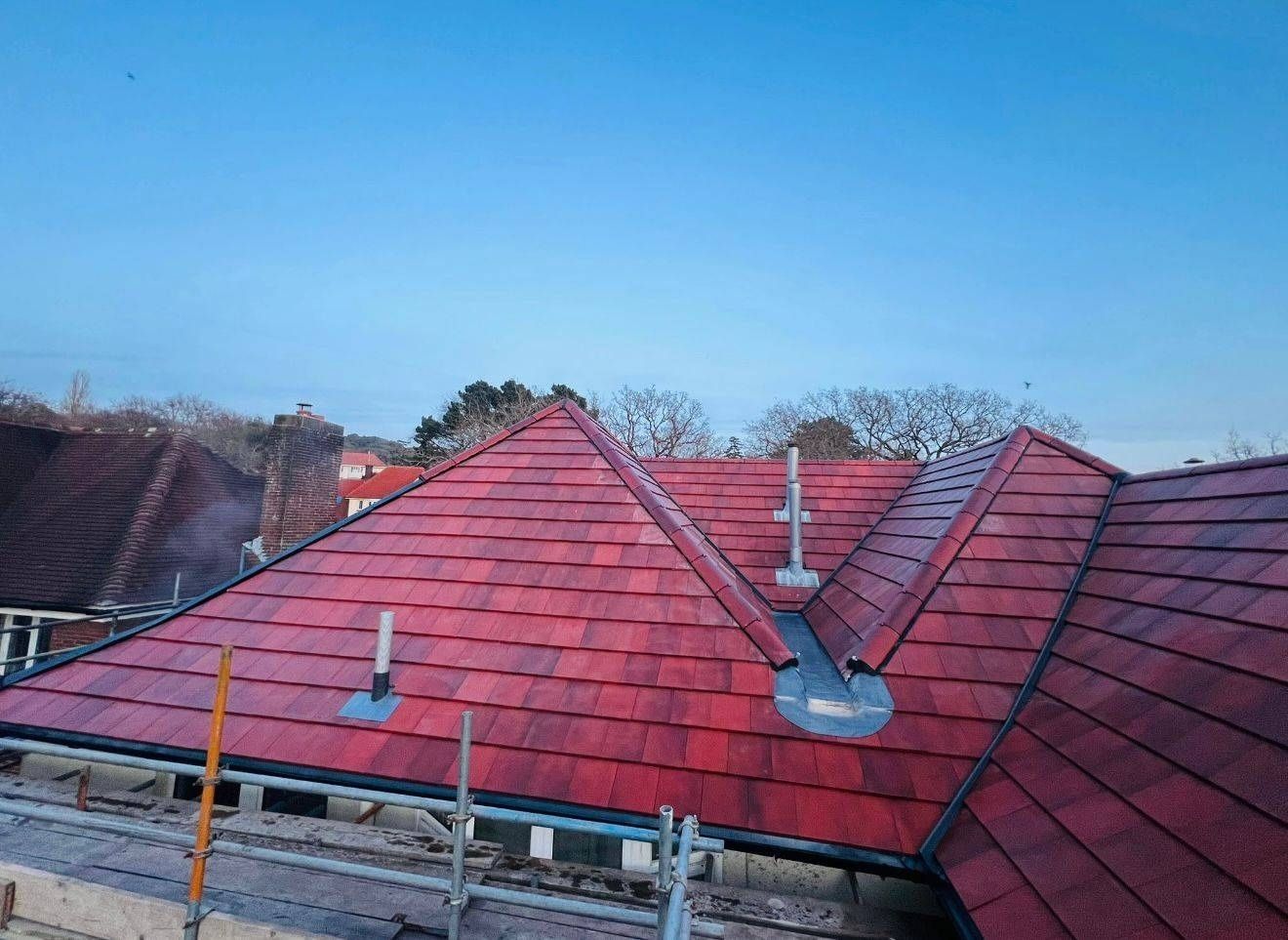
A rendered detached house in Canterbury with a twin-hipped roof, taken back to the rafters and re-covered in red clay plain tiles. Scaffolded, stripped, re-membraned, re-battened and re-tiled, with the valley between the two hips reformed and a dry ridge fitted throughout.
- Property
- Rendered detached house, twin-hipped roof
- Covering
- Red clay plain tiles
- Underlay
- New breathable membrane
- Battens
- Fully re-battened
- Ridge and hips
- Dry fixed, not mortar bedded
- Valley
- Reformed between the two hips
- Access
- Full scaffold to all elevations
Why the roof came off rather than being patched
Once a roof of this age is losing tiles in more than one place, patching becomes a series of visits rather than a fix. Stripping it back to the rafters is the only way to see the battens and the timbers properly, and on a roof like this the battens are usually the thing that has gone. It is also the only point at which you can put a breathable membrane underneath, which the original build would not have had.
Two hips and a valley
A twin-hipped roof has more junctions than a plain gable roof, and the valley where the two slopes meet is where the water concentrates. That junction is the part of this roof most likely to have leaked before and the part most worth getting right, so it was reformed as part of the work rather than patched back in. The hips themselves were run in with the same clay tile so the lines stay consistent from the road.
Clay tiles and a dry ridge
Red clay plain tiles suit this style of Canterbury property and weather to a softer colour over time in a way concrete does not. The ridge and hips were finished with a dry ridge system, which is mechanically fixed rather than bedded in mortar. Mortar bedding has a life of roughly 20 to 30 years and is the single most common thing we come back to on older Canterbury roofs. Dry fixing removes that maintenance cycle entirely.
The job, in order
Got a roof like this?
We quote in writing with the work broken down, and prices for this kind of job are published on our costs page.
More about new roof installation or roofing in Canterbury.