Canterbury · Solar panel roofing
Re-roof with in-roof solar panels, Canterbury
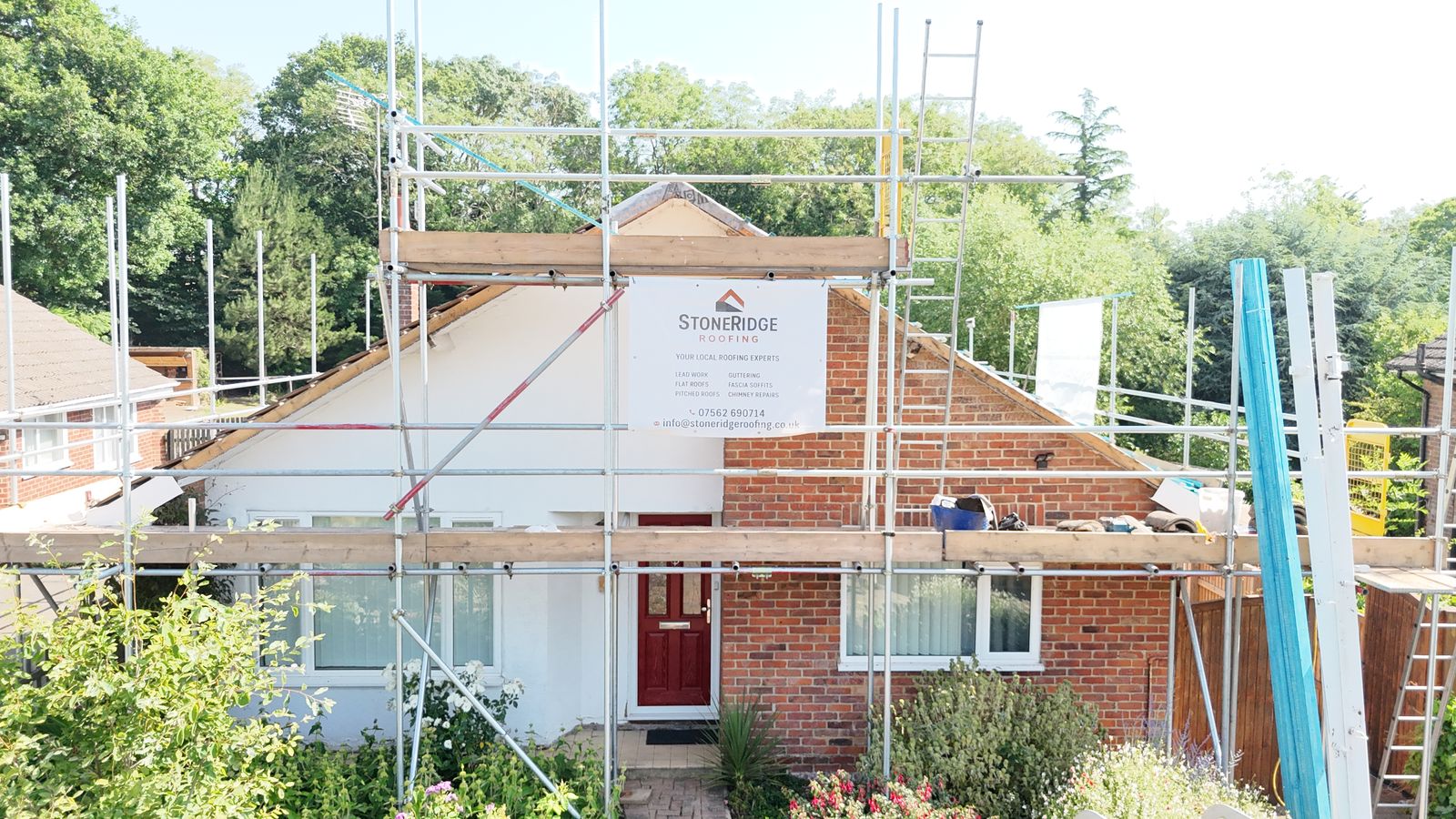
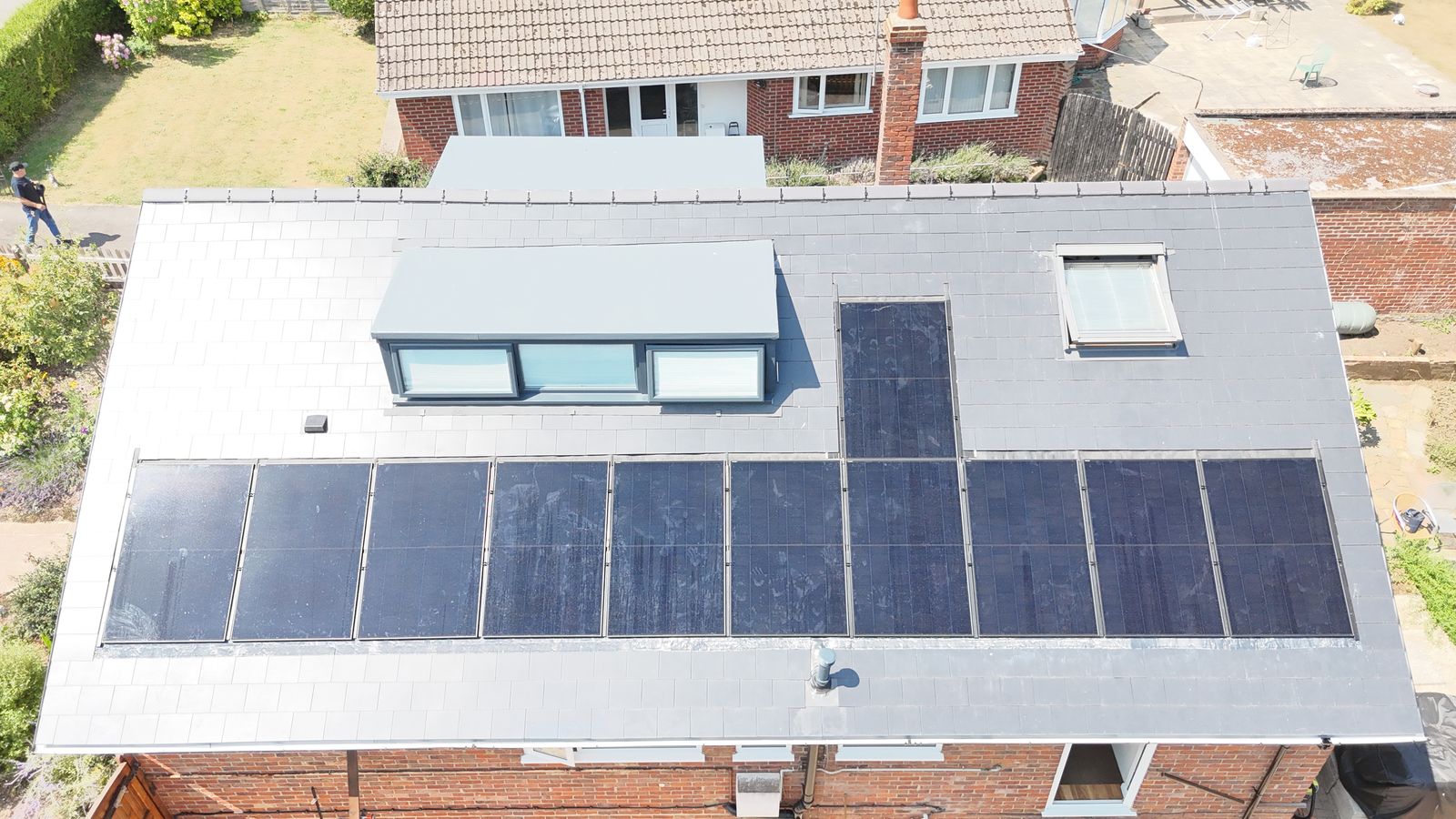
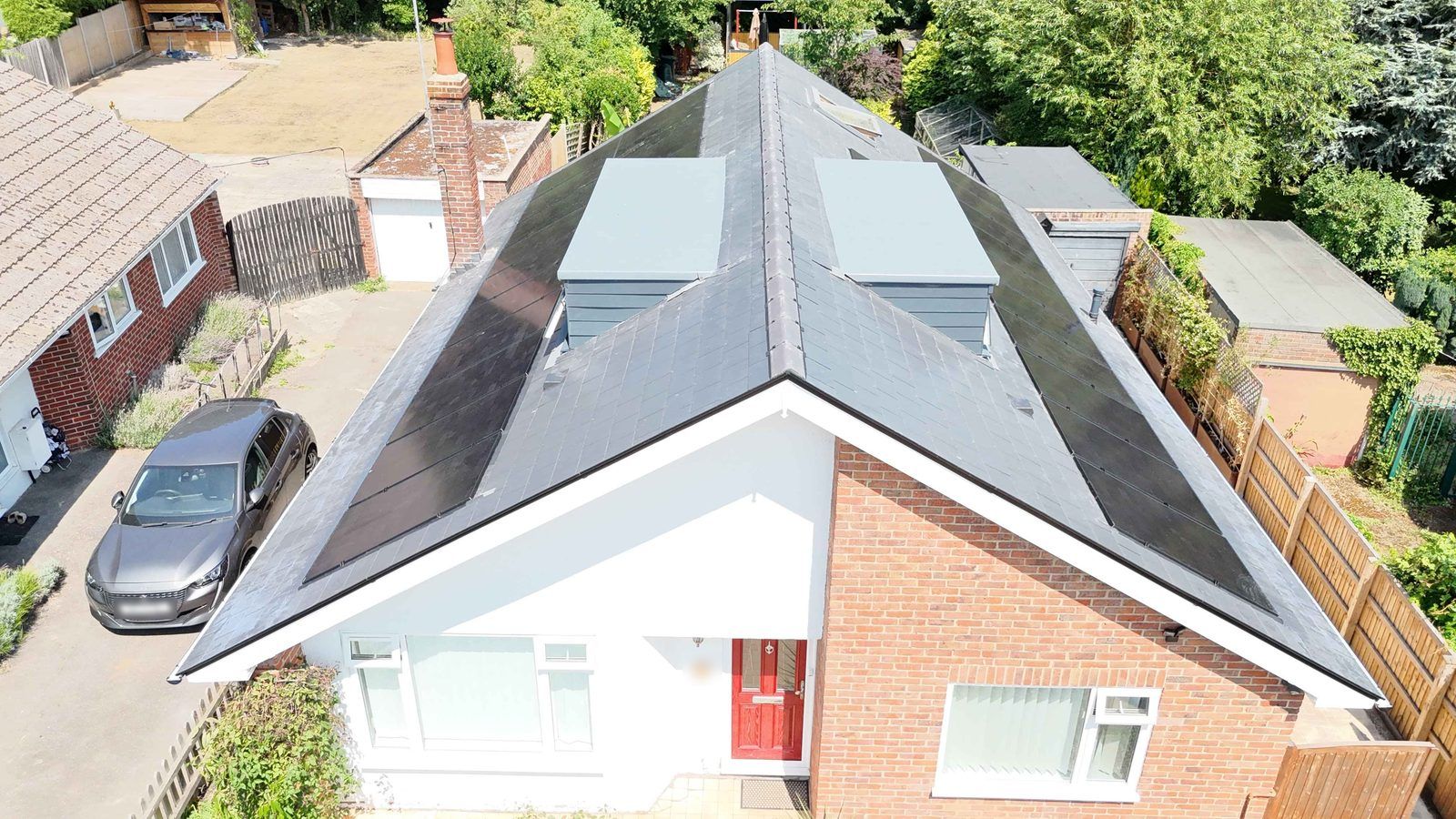
A detached Canterbury bungalow with dormers and rooflights in the roof, taken back to the rafters and re-covered in slate, with the solar panels built into the roof rather than bolted on top. We did the roof; the solar was fitted by a solar company we work closely with. About three weeks from the scaffold going up on 24 June 2026 to it coming down on 16 July.
- Property
- Detached bungalow with dormers and rooflights
- Covering
- New grey slates
- Underlay
- New breathable membrane
- Battens
- Fully re-battened
- Solar
- In-roof panels on both main slopes, fitted by our solar partner
- Rooflights
- Kept and set into the new roof
- Time on site
- About three weeks, 24 June to 16 July 2026
Why in-roof solar, and why at re-roof time
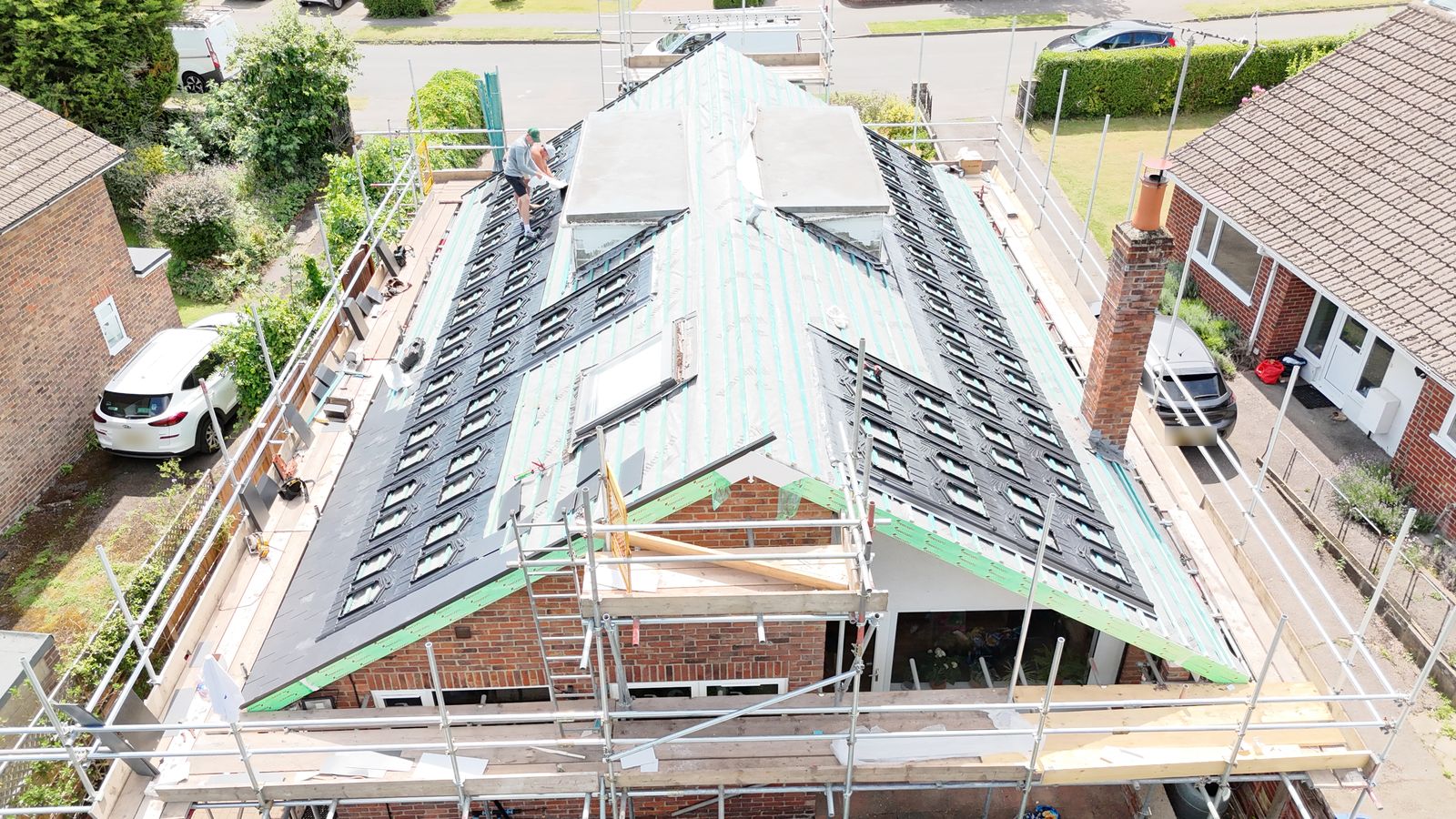
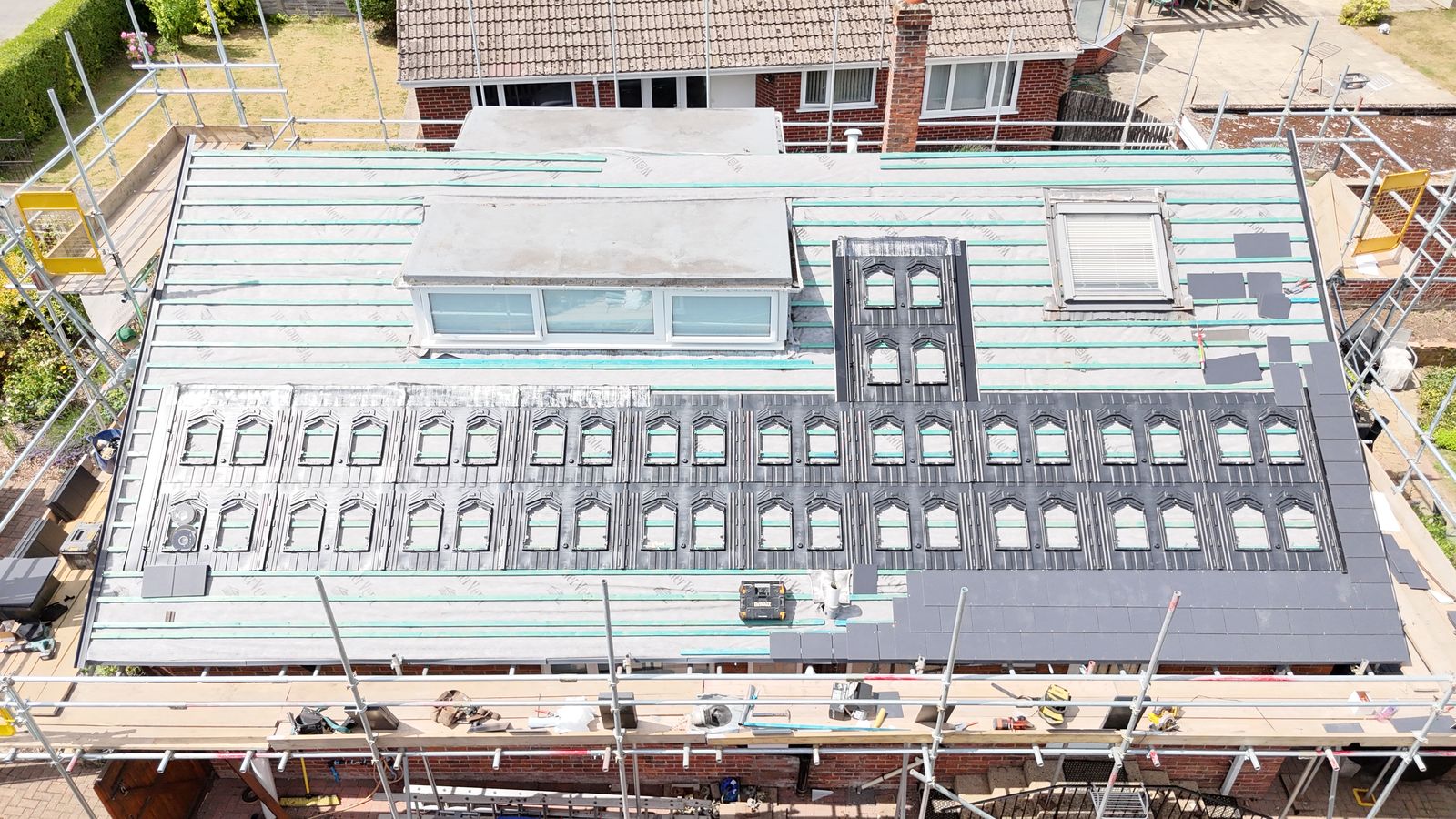
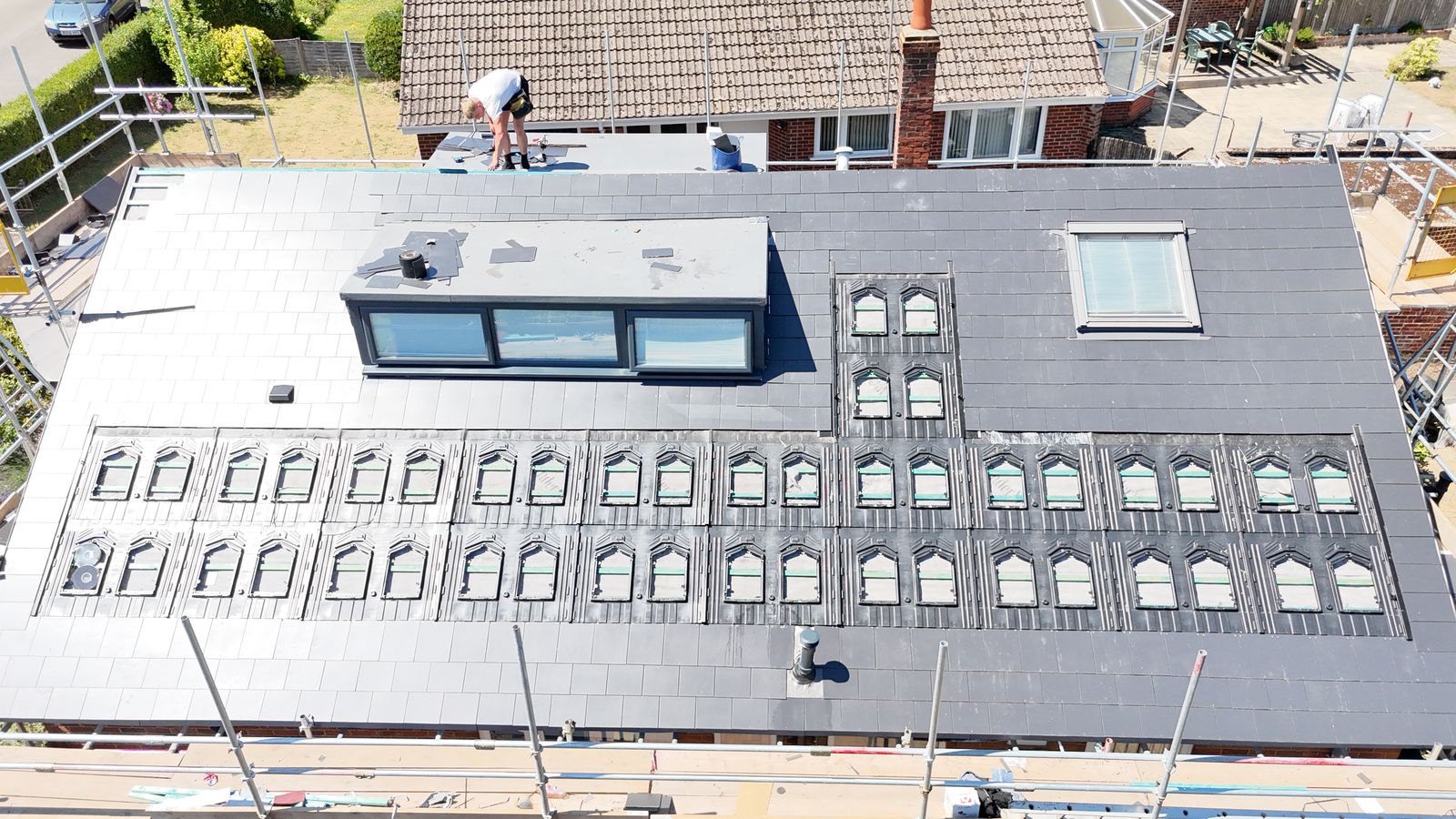
Ordinary solar panels sit on brackets above the slates or tiles, hooked under them and fixed through to the rafters. In-roof panels take the place of the slates instead. The mounting trays are fixed at batten level, the slates are laid up to them, and the panels sit almost flush with the finished roof. It looks cleaner from the street and nothing is clamped over the roof covering. The catch is that the trays have to go in while the roof is open, so it only makes sense when the roof is coming off anyway. If your roof is due for replacement and you are thinking about solar, that is the time to do both. One honest trade off: panels sitting in the roof get less air behind them than panels on brackets, so they run a little warmer, and warm panels produce slightly less. On a roof that needed replacing anyway, most people decide the look and the single job are worth it.
Laying the roof out around the solar
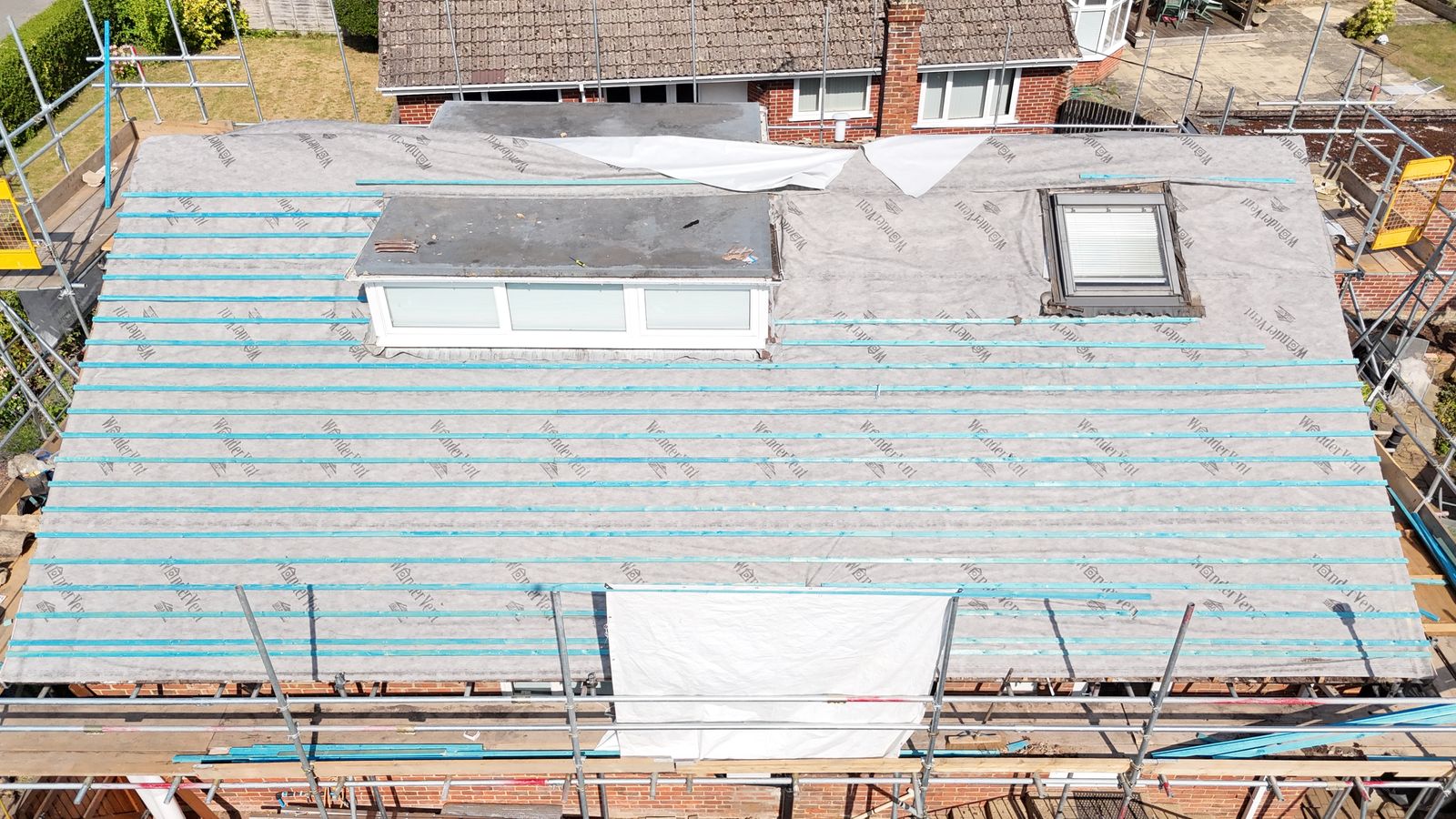
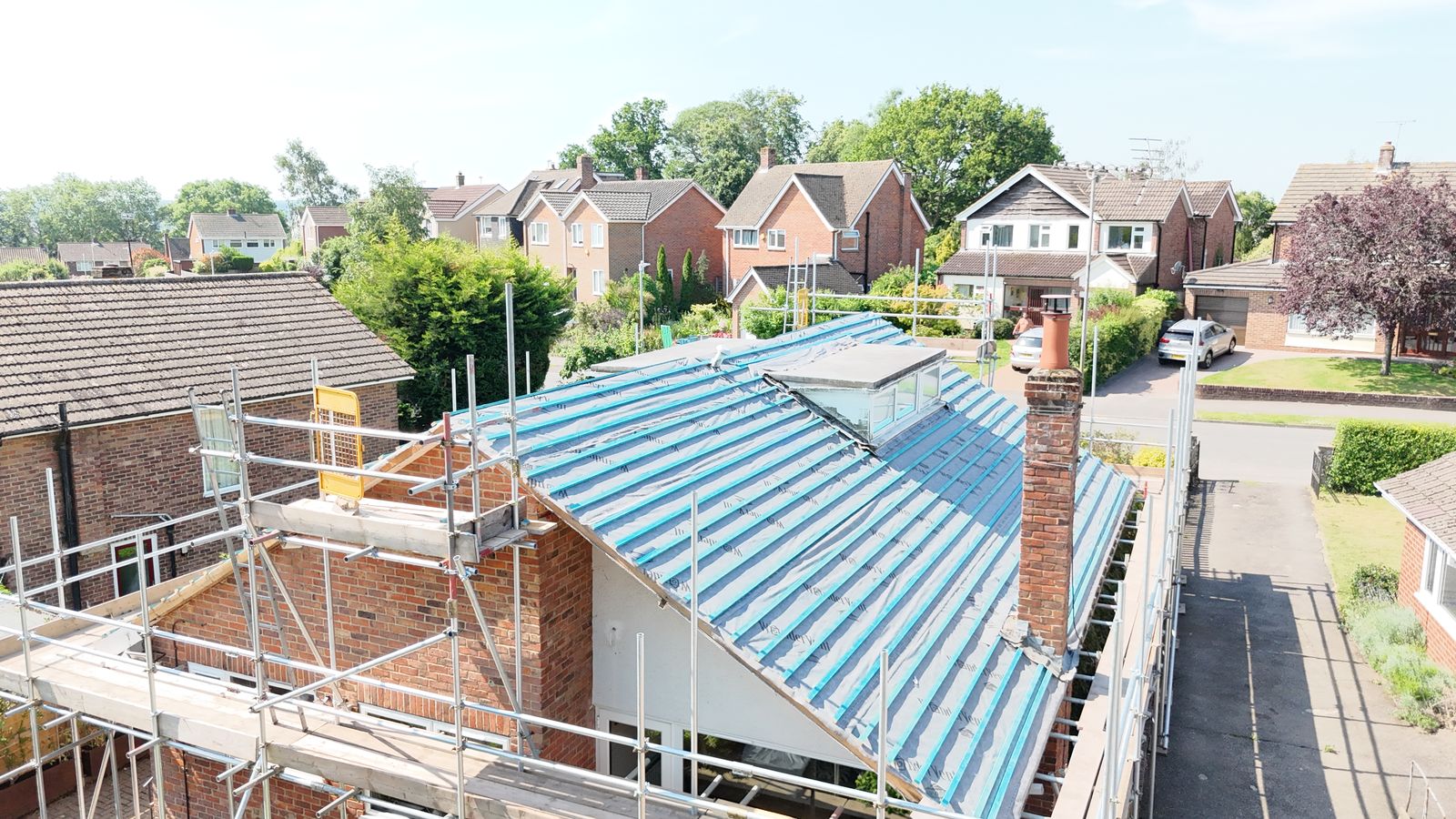
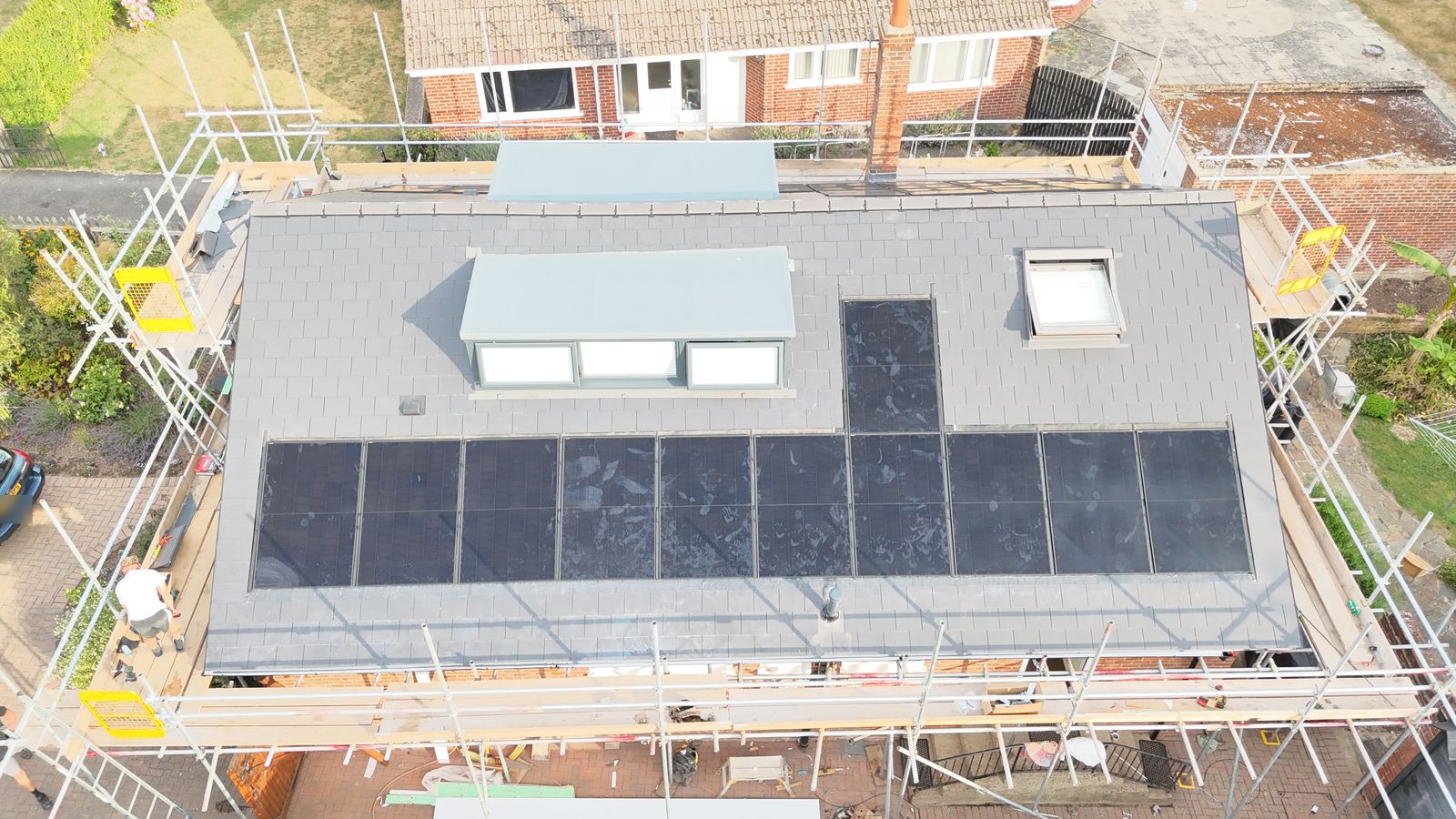
The roof already had dormers and rooflights, so the panels had to fit around them, which is why one slope has a T shape rather than a plain rectangle. That meant working hand in hand with the solar company rather than one trade finishing before the other started. The order matters. We stripped the roof, laid new breathable membrane and re-battened, the solar trays went in, and then we set the slate courses out so they meet the trays cleanly at the top, bottom and sides. Get that wrong and you end up with cut slates in odd places or a gap where the water gets in. The photos show the trays going in on 29 June and the slopes slated up to them by 2 July.
Working around what was already there
The dormers and rooflights were already in place and stayed where they were. Each one is a junction where the new membrane and slates have to be dressed in and weathered properly, and those junctions are where an older roof usually starts letting water in, so each was worked in as the new slates went on rather than left as it was.
The job, in order
Got a roof like this?
We quote in writing with the work broken down, and prices for this kind of job are published on our costs page.
More about solar panel roofing or roofing in Canterbury.